Coffee News and Information

 Join the Travel Hacking Cartel

Tags
adventure advertising AeroShot airplanes ambition America art Australia bakery barista barista championship baristas basketball Beijing blogging bonk book book review bravery Brazil brewing methods buildings bus station business cafe cafe review caffeine cappuccino Case Study celebrations censorship championship China Chinglish class Coava coffee Coffee Fest coffee review coffee shop coffee shops community competition contest courage create culture Datong Dayton decaffeinated decisions dreams driving dunkin' eating economics economy education entrepreneurship environment espresso ethics exercise family farming food Fox News freelancing friends funny goals Godin Great Wall green coffee Greyhound Guillebeau guitar hacking Happy Cup harmony harvest heat HFC history holidays hood river hostel how to brew how to roast humbug humor iced interview Italy judging junk food keep it weird kid-friendly kind strangers Kobos Korea languages latte life links love marketing Massachusetts Mongolia Trip music new perspectives new year news non-conformity Nossa Familia nutrition NWRBC obesity pastries PDX people persistence philosophy picture pictures poetry politics Portland power presentation private equity quality rain Ralph Waldo Emerson rant restaurants reuse review Ristretto roasting running San Francisco SCAA SCAA 2012 Seattle self-reliance service shopping sivers social media society sounds specialty coffee Starbucks Stumptown success sustainability Tacoma tasting tea technology Torque traffic travel traveling Trust30 USBC Vancouver videos wandering water WBC weather wine winter work writing

Sign Up for Email Updates

Connect and Share

Follow CaffeinatedPDX on Twitter Become a fan on Facebook

Search CPDX
Tweet, tweet...
Archive

Entries in languages (11)

Wednesday
Aug172011

Buckle up, we care about you (really!)

Language matters.

Walking down the street near Belmont Ave. today, I noticed the following sign at the exit of an apartment complex’s parking lot. The sign caught my eye for its choice of words and for its callous connotation. Can you guess why?

 

Thanks for caring

Hint:

Tenant=person who lives at the place

Tenancy=agreement to pay rent in exchange for the right to live there

There is a subtle, but very important, difference between saying “we value your tenancy” and “we value our tenants.” By valuing tenancy, the sign implies that they want you to buckle up so that you can pay your rent. I am sure (well, I hope) that whoever wrote the sign for American Property Management intended to say they value their tenants but made a mistake in the writing/editing process. Surely, they care about the people that live in the apartments, right?

It could be an innocent mistake, or perhaps it was a Freudian slip.

Then again, maybe they were just being honest.
Tuesday
Mar012011

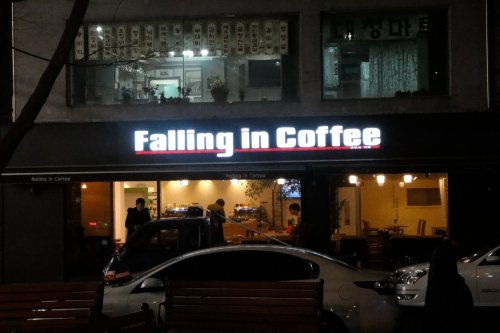
Koreans really get into their coffee...

Jennie G, of Not Just Kimchi, sent me another picture from Seoul, where the coffee culture is growing by leaps and bounds. I suppose you could say that coffee is making a big splash in the country, at least at this café.


A coffee-lover's dream

Tuesday
Nov022010

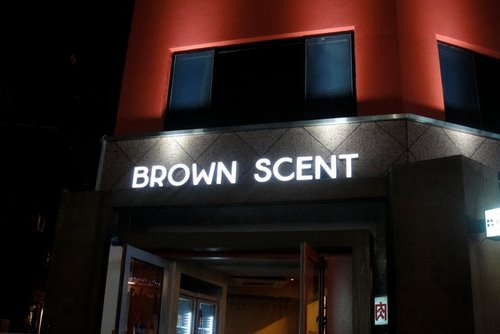
Brown Scent?

My friend Jennie, an MIM grad who lives in Korea and writes the blog Not Just Kimchi, sent this to me yesterday. It’s the picture of a coffee shop in Seoul. Interesting name, don’t you think? 

I doubt if Howard Schultz is going to try to steal their marketing manager

Monday
Nov012010

Coffee Fest Recap Part 1

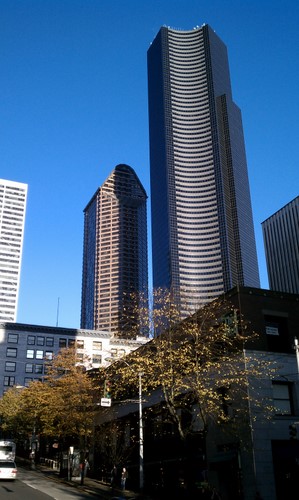
If you’ve read my last couple posts, you know that I spent this past weekend at Coffee Fest in Seattle. One of the reasons I wanted to go to the show was to see the city itself. It had been a long time (8 years or so) since I visited the Emerald City, and I had forgotten how much bigger Seattle is. Seattle’s downtown area has a lot more people and quite a bit more traffic.

Like Portland, Seattle has a reputation for being rainy, but when the sun is out (as it was on Friday afternoon), it is a beautiful city. On a clear day you can see the Olympic Mountains to the West and Mount Rainier to the East. Located on Puget Sound, Seattle has a number of inlets and lakes that carve up the city.

Nothing but blue sky, at least for one day

Click to read more ...

Tuesday
Oct192010

Gigibar: A Linguaphile’s Café (closed)

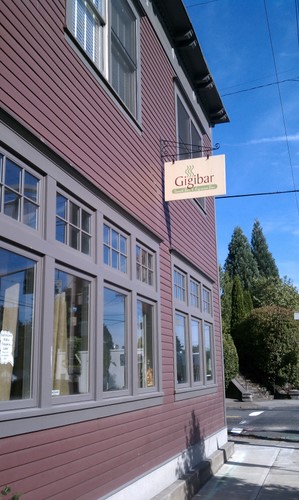
I went to Gigibar the other day out at the corner of 60th and SE Division to drink some coffee and to meet with a fellow MIM graduate, David Hubbard. I arrived around 10:30am, and had the café to myself when I arrived. Gigi, the owner, greeted me and asked what I wanted to drink. I asked her about her espresso and she told me it was Bella Selva, an organic coffee roasted by K&F Coffees, a Portland company. She said it was a lighter roast that was kind of chocolaty. I ordered a double ($2) and went to sit down. The coffee was nice and toasty, not over-extracted or bitter. 

Gigibar

Click to read more ...

Friday
Sep102010

Discovering China

You might wonder why someone from a small town in Eastern Washington would ever be interested in going to spend a month in China to study Chinese. I had to think about that for a while to come up with an answer. When I came home to harvest last week, I remembered why. The answer can be traced back to Dayton and to my best friend from home, Ryan Rundell.

Ryan and I have known each other for more than 25 years. He has been one of my best friends for almost as far back as I can remember. Over the years, we spent hours playing sports together, rehearsing and performing in school musicals together, chasing girls together and rooming together in college. Ryan is the one who got me interested in China and learning Chinese. Here’s the story:

我最好的朋友

Click to read more ...

Tuesday
Aug312010

Why Would Anyone Want to Study Chinese?

Some of you have asked me why people come to BLCU for a one-month (or longer) intensive Chinese language study. I’ve been meaning to write about the topic for a while—sorry for the delay. Here are some of my classmates’ stories (unfortunately, I didn’t have pictures of everyone).

The first student I want to introduce to you is Lee Dong-Deuk. Lee is a 53 year-old businessman from Seoul, South Korea. Twenty years ago, he started a business importing wall coverings into South Korea (the company’s website is here). Lee is taking a month off from the day to day operations of the company to come here and study. Lee has studied Chinese in Korea for the last two years with an online Chinese teacher. He is studying because he likes languages and also because he sees potential business opportunities in China. He knows that being able to speak Mandarin will help him build relationships and conduct negotiations with Chinese buyers and suppliers.

Lee

Click to read more ...

Thursday
Aug262010

Who are You? Names in China

If you ever decide to study Chinese, as a foreigner one of the first things the teacher will do is help you select a Chinese name. It is tradition that everyone who studies the language has a Chinese name. Students also learn to write their name in characters (hanzi), and the name will stick with you for as long as you study Chinese. I suppose it’s possible to change it, but I don’t know many people who have.

You might find it interesting to know how the teachers come up with the names. There are two parts to the name, and the family name is written first, unlike in most countries in the West. Some students, from Korea and Japan in particular, already have names that can be written in traditional Chinese characters. The pronunciation is different, but the meaning is the same. Park Junwoo becomes Piao Junyou, for example. For people from other countries, the teacher often takes the first couple letters of each of your first and last names and tries to find names that sound similar to those syllables and also have a nice meaning. For example, Jennie Griffen becomes Zhen Gui, which sounds like Jenny and means ‘really honorable.’

Click to read more ...

Thursday
Aug122010

I'm Crook (really!)

I've got one more quick story for the week, and then I’m headed out of town for the weekend. BLCU organized an optional field trip for us to the province of Inner Mongolia, and spending two nights in a yurt on the Mongolian grasslands is something that everyone should do at least once in their life, or so I’ve been told. One of the lessons from our reading textbook was about this particular excursion, which the school offers every year. It promised us blue skies, white clouds, green grassy plains and herdsmen singing traditional Mongolian folk songs. When we get back, I’ll let you know if they were telling us the truth.

The trip aside, today’s story is about languages. More specifically, it’s about English and the diversity within the language. My friend Roberta, an Italian who sits next to me in class, asked me if I would understand her if she said “I’m crook.” I told her no. You can say “I’m a crook” or “I’m crooked” (though who would ever say either?), but “I’m crook” doesn’t really mean anything to me.

Click to read more ...

Friday
Aug062010

Holy Hanzi Batman! What'd she say?

Apparently, my Chinese placement test went pretty well. Either that, or the teacher who gave the test was playing a cruel joke on me. They put me in level C10, which is an intermediate level. Intermediate sounded about right to me. I imagined that the class would be hard but that I would understand what was going on.  I didn’t. Let’s just put it this way: the first class was hard. I don’t mean “run the Portland marathon” hard, I mean “run the Hood to Coast by yourself hard”. . . . .While carrying your sister on your back. . . . . . .Barefoot. . . . .Get the picture?

From the minute the teacher walked in , I knew I was in trouble. She began right away, welcoming everyone and asking us to introduce ourselves. That was no problem, since our teacher at PSU had drilled us on this a lot, but once we opened the textbook everything went to hell. I’ve spent quite of time studying characters (hanzi) on my own, but mostly without the context of a sentence or paragraph. When I started reading the text, I could not really understand the meaning. Reading the book out loud made my comprehension decrease even more. Our teacher would stop to explain terms to us (all in very fast Mandarin), often writing lots of characters on the chalkboard to make her point.

Click to read more ...

Tuesday
Aug032010

Chinglish of the Day

There are plenty of interesting English translations in China. I won't criticize anyone's translations, especially as I spend hours each day trying to do my own, but I do think you'll find some of them humorous. I'm not sure that today's is really that bad of a translation, but it is interesting. I saw it on a restaurant sign as we were riding the bus back to Beijing after visiting the great wall (and it is great). 

COD: Donkey meat Dongquan Reservoir Fish

Mmmmm. Too bad we couldn't stop, don't you think?